

Home » Why choose Smith » Why patented oxyfuel technologies matter
Why patented oxyfuel technologies matter
Smith’s suite of patented oxyfuel technologies provides engineers, production managers, and safety professionals with a tangible assurance that the system will last, perform, and withstand failure modes. In economic, operational, and safety terms, that makes Smith the world’s best oxyfuel equipment brand.

In this article
Takeaways
Smith’s patented / branded oxyfuel technologies—Toughcut™, Graf-Tite®, Sure Seat™, Gasaver™, Gas Axe™, Versa-Torch™, Tag-A-Long™, Selec-O-Gas™, Hard Hat™, Handi-Heet™, Little Torch™, Quickbraze™—each address a critical performance, durability, or safety dimension.
These technologies yield concrete user benefits: better sealing, less leakage, modular use, stronger structure, fuel savings, field portability, flexible gas switching, impact protection, ergonomic handling, precision small-flame operation, and faster brazing workflows.
Because the technologies are integrated into Smith’s design and protected from cheap replication, they reinforce brand integrity, service consistency, and user trust. Collectively, they produce an oxyfuel ecosystem that is more durable, more reliable, and safer than generic or lower-tier alternatives.
Why Patented Oxyfuel Technologies Matter
In oxyfuel systems, small improvements in sealing, mixing, strength, convenience, or control can yield large gains in safety, lifetime, and performance. A brand that invests in patented innovations signals seriousness: it protects its design investments, ensures consistent performance, and differentiates from generic copycat gear.
Smith (a Miller Electric brand) has a long legacy in oxyfuel, and its product lines often integrate technologies under names like Toughcut™, Graf-Tite®, Sure Seat™, Gasaver™, Gas Axe™, Versa-Torch™, Tag-A-Long™, Selec-O-Gas™, Hard Hat™, Handi-Heet™, Little Torch™, and Quickbraze™. Many of these are registered or patented or proprietary designs.
Below, I describe each technology, explain its benefits, and then show how together they build a durable, reliable, safe oxyfuel system that is difficult to match.
Why to choose Smith
Here you will find compelling reasons to make Smith your preferred brand of oxy-fuel equipment:
Overview of Each Smith Oxyfuel Technology
Here is a breakdown of Smith’s notable proprietary / branded technologies, their purpose, and user advantages:

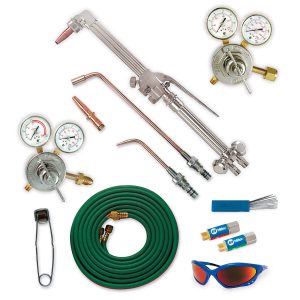
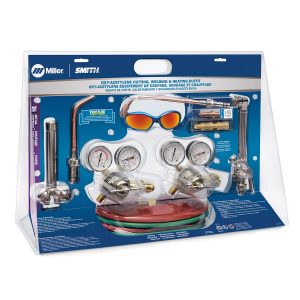
Description: Toughcut is a line of oxyfuel outfits (kits) designed for medium- to heavy-duty cutting, welding, heating, and brazing applications. According to Smith’s literature, Toughcut™ outfits include torches, regulators, and accessories configured for reliability and broad tip compatibility.
User Benefits: The benefit is a “one-stop” high-quality outfit that balances cost and ruggedness. The Toughcut series allows wide tip spread, good durability, and is often marketed as robust for many cut/weld/heating tasks. It gives users confidence that the components are matched and tested.
Description: Graf-Tite® is a seating / tip-sealing technology—“Graf-Tite Soft Seat” is described in Smith’s product sheet as a pliable seat (often graf-tite material) that compresses and conforms to torch head surfaces, creating a positive seal even if the tip seat is slightly nicked or imperfect.
User Benefits: The value is leaking control and tip reliability. Even if the torch head or tip edge has minor damage, the Graf-Tite seat helps maintain a tight seal, reducing leaks, preserving gas flow consistency, and improving longevity.


Description: Sure Seat™ protects the regulator seat from debris. According to Smith’s “Technologies” page, Sure Seat helps maintain reliable sealing by keeping contaminants away from the seat interface.
User Benefits: A clean, undamaged regulator seat means fewer leaks, fewer pressure drift problems, and more stable performance over time—especially in field conditions where dust, scale, or slag might otherwise penetrate.
Description: The Smith Gasaver is a torch / tool designed for gas-saving performance, often used for brazing, welding, or small heating jobs.
User Benefits: It allows reduced fuel gas consumption when full cutting power is not needed. This leads to cost savings, less waste, and more efficient use of fuel gas over many operations—especially valuable when fuel cost is high or in high-volume shops.


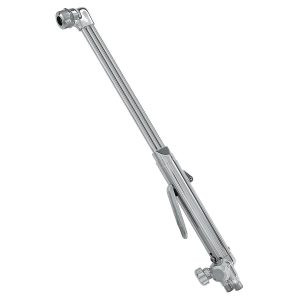
Description: Gas Axe™ is a heavy-duty hand-cutting torch line in Smith’s catalog. The “Gas Axe Extra Heavy-Duty” torch can cut up to 20 inches (508 mm) of steel in certain configurations.
User Benefits: For demolition, scrap, or thick-section work, Gas Axe gives users a very powerful cutting capability in a handheld format—less need for machine cutting or specialized plasma. Because it’s engineered as part of Smith’s product family, you get compatibility, durability, and support.
Description: Versa-Torch is a flexible outfit/torch branding used by Smith for portable, multi-purpose torches and outfits (mix of cutting, heating, brazing). In Smith’s materials, Versa-Torch is grouped with Tag-A-Long for portable outfits.
User Benefits: Flexibility. A single torch outfitted for multiple applications (cutting, heating, brazing) reduces tooling inventory, simplifies operator training, and provides modularity. It’s easier to adapt to changing job demands.


Description: Tag-A-Long™ is a portable oxyfuel outfit: lightweight, self-contained kits with torch, hoses, and regulators housed in a polyethylene carrier. These kits typically weigh less than 35 lb, making them mobile for field work.
User Benefits: Users gain portability. You can carry a complete weld/cut outfit into remote or confined sites, maintenance zones, repair shops, or on vehicles. It reduces the need to drag full systems; ideal for mobile trades.
Description: Selec-O-Gas™ is another Smith technology, presumably to allow quick switching or selection among gas/fuel mixes (Although public documentation is limited, Selec-O-Gas suggests “selectable gas” capabilities).
User Benefits: The benefits are flexibility and efficiency. Operators can choose among fuel gases (e.g. acetylene, propane, natural gas) on a single torch system, optimizing flame and cost per job without changing entire torch assemblies. This reduces downtime and tool inventory.


Description: Hard Hat™ is probably a protective accessory or structural casing for torches or regulators—intended to guard components from impact or damage in tough environments. The term “Hard Hat” suggests external robustness.
User Benefits: By shielding valuable parts (valves, seats, bodies) from knocks, heat, slag, or dropped tools, Hard Hat extends the life of equipment and reduces repair frequency. For harsh industrial, shipyard, or repair environments, that protection matters.
Description: Handi-Heet™ is a torch handle (or series) designed for heating or brazing / small torch use. Smith’s catalog shows a torch handle labeled NE180A (Handi-Heet) in their cutting & attachment listings.
User Benefits: compact, ergonomic, reliable heating tool for preheating, bending, shrink-fitting, or small brazing tasks. It gives flexibility in shop work without full cutting torch overhead.


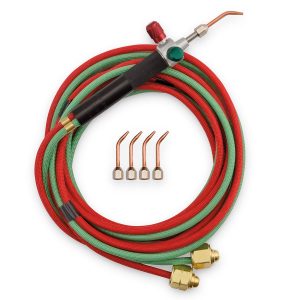
Description: Little Torch™ is Smith’s small torch line, intended for fine work or tight access spaces. The “Smith Equipment Catalog” references the Little Torch among other small torch products.
User Benefits: In small or intricate welding, brazing, or heating tasks, the Little Torch gives precise, controllable flame in a compact package, enabling work in confined grooves or maintenance spots.
Description: Quickbraze™ is a dedicated brazing/welding handle / torch product line that allows fast switching or simplified brazing operations. Smith’s product catalog shows a “Quickbraze Torch Handle w/Hose.”
User Benefits: Efficient brazing workflows, reduced setup time, simplified controls tuned for brazing temperatures. Operators can move quickly among brazing tasks without overadjusting a cutting setup.

How These Patented / Proprietary Technologies Combine to Make Smith the Superior Choice
Here is how the collective portfolio of Smith’s branded / patented features advances durability, reliability, and safety in oxyfuel applications:
1. Enhanced sealing and leak resistance
- Graf-Tite® ensures tip-seat interfaces remain tight even if the seating surfaces get nicked.
- Sure Seat™ protects regulator seats from debris, preserving integrity over time.
- These features reduce leaks, maintain performance, and reduce the wear on downstream components.
2. Modular, flexible configurations reduce misuse
- Versa-Torch™ and Selec-O-Gas™ give operators controlled flexibility, letting them stay in safe design envelopes even while shifting gases or tasks.
- Tag-A-Long™ portability ensures that gear is always in the right place, reducing the risk of field improvisation.
3. Strength and robustness under harsh duty
- Gas Axe™ heavy-duty torches are built with thick-wall forged heads, multiple tube construction, and robust bodies rated for extreme cuts. Smith’s spec sheet notes “three-tube construction keeps gases separate until in-tip mixing” and “thick-wall forged brass head” to reduce heat wrapping and damage.
- The Hard Hat™ protective elements guard against impact or environmental damage.
4. Efficiency and economy
- Gasaver™ reduces fuel consumption during non-cut phases, lowering operating cost and thermal stress.
- Quickbraze™ and Little Torch™ allow task-specific tools that avoid overpowered cuts (less wear, lower stress).
5. Safety-focused gas mixing and minimal mixed-gas volume
Smith’s designs emphasize mixing as close to the tip as possible. Their documentation highlights “In-tip Gas Mix” and “lowest volume of volatile mixed gas in the system for safest operation.”
This reduces the internal volume of combustible mixture upstream, making flashback or reverse propagation less likely.
6. Brand, support, and consistency
Because these technologies are proprietary to Smith, users get consistent performance and engineering validation. They reduce the risk of subpar third-party tip designs or competitor “knockoffs” that lack these protections.
Altogether, the technologies form a synergistic system: leak resistance keeps flows constant; modular flexibility reduces operator error; robust components resist damage; efficient features lower load; and safe mixing design reduces hazard. It’s easier (and cheaper) to maintain integrity in the field because the system is engineered to protect itself.
The world's safest oxyfuel equipment
Smith has always been designed with safety in mind. Take a further look at some of its main features.
Smith: Tool-free oxyfuel equipment that is very easy to use
When comparing Smith with other oxy-fuel equipment brands, Smith is worldwide considered the easiest to use and requires no tools for assembly or disassembly of its torch handles and attachments.
Smith torches are designed with hand-tightened connections—you can attach or remove tips, mixers, or attachments without wrenches. This tool-free design saves time, simplifies tip changes in the field, and reduces the risk of overtightening or damaging threads. The ergonomic layout of valves and controls also makes flame adjustment smoother for less-experienced operators.
In contrast, other brands of torches often use wrench-tight connections, requiring tools for assembly, tip installation, or maintenance. Their designs can be less convenient for quick changeovers or mobile work. Overall, Smith stands out for ease of use, quick setup, and operator-friendly design, making it ideal for applications where speed and simplicity matter.
Each time an operator changes a tip, attachment, or mixer—whether for switching from cutting to heating or simply replacing a worn tip—they must stop, find tools, loosen fittings, reassemble, retighten, and leak-check. This translates to faster setups and changeovers, which leads to more production output. With Smith’s tool-free design, these tasks take seconds instead of minutes.
Example:
- Average torch tip change with tools: 3–5 minutes
- Smith tool-free tip change: 20–30 seconds
In a shop with 10 operators changing tips or attachments 6 times a day:
| Scenario | Time Lost per Operator | Daily Time Lost (10 operators) |
|---|---|---|
| Other brands | 30–50 minutes | 5–8 hours/day lost |
| Smith | 3–5 minutes | 30–50 minutes/day total |
Meaning that Smith can instantly recover 4.5–7+ labor hours per day, which translates directly into higher daily throughput. If each labor hour costs the company $40 (fully burdened):
Recovered productivity:
- 4.5–7 hours × $40 = $180–$280 per day
- This means $4,000–$6,000 per month
- This means $48,000–$72,000 per year saved
All from tool-free, faster changeovers.
Oxyfuel Technologies Use Cases
All of these oxyfuel technologies look good on paper, but how do they work in practice? Take a look at the following examples.
Graf-Tite® in action
Imagine a cutting tip you swap multiple times over the years. Slight nicks or misalignment in the seating surface might degrade seal quality in a generic torch. But with Graf-Tite®, the seat material deforms slightly to maintain contact, preventing the high-pressure oxygen from leaking into fuel passages. That means more consistent flame, fewer gas losses, and less wear downstream.
Gasave™ saving fuel
On light heating or tack welding jobs, a full cutting flame is overkill. Gasaver lets you throttle back fuel consumption. In high-throughput shops, even modest fuel savings multiply over months—reducing operating cost and heat stress on components.
Gas Axe™ heavy cutting
If a shop needs to plunge-cut thick, structural steel occasionally, having a Gas Axe™ torch capable of 20-inch cuts (with propane) or 12 inch (with acetylene) means you don’t need separate plasma or machine cutters for every job. You retain oxyfuel flexibility with robust performance.
Tag-A-Long™ field use
A maintenance crew heading to a remote vessel or facility can carry a whole cutting/welding/brazing outfit in one 35 lb pack. No need to rig hoses or duplicate gear—Tag-A-Long gives them on-demand capability. Because it’s built with Smith’s core technologies, it maintains durability even when used off-site.
Featured Products

Why These Patented Designs Support Smith’s Reputation as the Best Oxyfuel Brand Worldwide
- Depth of innovation: Smith isn’t just copying industry standards; it adds multiple layers (seating, mixing, protective design, modular flexibility).
- Patent protection ensures that those advantages are harder to copy cheaply, preserving competitive differentiation.
- Well-engineered systems: each feature addresses a real failure mode (leaking, seat wear, operator error, fuel waste, impact damage, mixing hazards).
- Consistency and predictability: users know how a Smith torch will behave year after year.
- Global support: because these technologies are native to Smith/Miller, users benefit from a unified support and parts network for all these features.
When evaluating oxyfuel options, sophisticated buyers look beyond “does it cut.” They ask: how will it perform in five years? In dusty environments? Under field repair? Against flashback events? Smith’s portfolio of patented technologies gives strong answers in those domains.