

Home » Why choose Smith » Oxyfuel safety: Risks, best practices, and why Smith equipment is the safest choice
Oxyfuel safety: Risks, best practices, and why Smith equipment is the safest choice
Understanding oxyfuel safety practices and choosing the right equipment are essential. Among all brands, Smith oxyfuel equipment—part of Miller Electric—is recognized for its outstanding safety design. Its innovative tip-mixing technology dramatically reduces the possibility of flashbacks, one of the most dangerous events in oxyfuel use.

In this article
Takeaways
This article explains the major risks of oxyfuel operations—such as leaks, flashbacks, and regulator failures—and emphasizes that safety must be the top priority in all oxyfuel tasks. It stresses that proper training, inspection, and workspace preparation are essential to prevent accidents.
It outlines key safety practices before, during, and after use, including correct cylinder setup, leak testing, ignition and shutdown sequences, and regular equipment maintenance. Following these procedures help operators maintain stable flames, prevent gas leaks, and reduce the risk of injuries or equipment damage.
It concludes by highlighting why Smith oxyfuel equipment is regarded as the safest choice. Its patented tip-mixing design, which keeps gases separate until the point of combustion, greatly minimizes flashback risk. Combined with durable construction and proven reliability, this makes Smith the global standard for oxyfuel safety.
Why safety in oxyfuel matters
When it comes to oxyfuel cutting, welding, heating, and brazing, safety is non-negotiable. Oxyfuel systems operate under high pressure, combining pure oxygen and flammable gases such as acetylene or propane. A single mistake or leak can cause fire, explosion, or serious injury.
The goal of this article is to provide a deeply detailed reference on:
- The full spectrum of risks
- Safety practices in each phase (pre-use, during, post-use)
- The advantages that make Smith oxyfuel equipment the safest in the world
Let’s begin by exploring the risks.
Why to choose Smith
Here you will find compelling reasons to make Smith your preferred brand of oxy-fuel equipment:
Understanding the Risks of Oxyfuel Equipment
This section of the article explains the risks involved in oxyfuel work, which can be flashbacks and backfires, leaks and gas accumulation, pressure and regulator hazards, as well as others.
Flashback and Backfire: The Most Critical Dangers
A flashback happens when the flame burns backward into the torch, hose, or regulator. It can lead to catastrophic explosions if it reaches the gas cylinders.
A backfire or sustained backfire is when the flame retreats into the tip or torch body but stops before reaching the hoses. Although less severe, it signals improper pressure or blockage and must be addressed immediately.
Common causes of flashbacks include:
- Incorrect startup or shutdown sequence
- Running a cylinder empty, causing reverse flow
- Dirty or clogged tips
- Missing or faulty flashback arrestors
- Damaged hoses or connections
- Incorrect gas pressures
Every oxyfuel operator must be trained to recognize and prevent these issues before lighting a torch.
Leaks and Gas Accumulation
Gas leaks can turn a workshop into a bomb. Even a small leak can fill an enclosed area with a combustible or oxygen-enriched atmosphere.
- Fuel gas leaks (acetylene, propane, propylene) can create explosive mixtures with air.
- Oxygen leaks increase flammability—materials ignite more easily, and fire burn hotter.
Routine leak tests with approved solutions (never oil or soapy water) are vital to ensure oxyfuel system integrity.
Pressure and Regulator Hazards
High-pressure gases pose hazards:
- A contaminated or improperly installed regulator can fail catastrophically (e.g. diaphragm rupture)
- Debris or oil/grease in regulator internals can ignite under high-pressure oxygen flows
- Rapid pressurization may generate heat (compressor heat) that exacerbates ignition risk
As Miller’s safety instructions note, one must open oxygen slowly “to minimize the heat of recompression generated inside the regulator.”
Thermal, Fire, and Physical Hazards
Oxyfuel torches generate flames exceeding 3,000 °C (5,400 °F). Without correct protective gear and workspace discipline, burns, UV/IR exposure, and fires are real threats.
Nearby materials—cloth, paint, solvents—can ignite in seconds if proper clearances aren’t maintained.
Fire and ignition of surroundings
Because oxyfuel operations involve open flame, any nearby combustible material (paper, rags, solvents, wood, dust) can ignite. Even ambient contamination (grease, paint, oils) can catch fire. The “fire triangle” (fuel, oxygen, heat) always must be controlled.
Cylinder hazards and mechanical risks
Gas cylinders under pressure can become dangerous projectiles if they fall or valve breaks. Mishandling can lead to catastrophic release. Cylinders must always be secured upright. Other risks include:
- Incorrect gas cylinder identification (mixing up fuel vs oxidizer)
- Exposure to sudden pressure surges or shock waves
- Cylinder overheat in fire
- Valve damage or leaks
Safety Practices Before, During, and After Oxyfuel Use
This section of the article explains in detail safety practices to follow before, during, and after using oxyfuel equipment. This includes the preparation work, staying alert during the operation, and the proper shutdown.
Before You Start: Preparation Saves Lives
The pre-use phase is the foundation of safe oxyfuel work. Checklist before lighting the torch:
Training and procedural competence
- Operators must be trained in oxyfuel safety, flame behavior, hazards (fire, flashback, backfire), and emergency procedures.
- Ensure familiarity with manufacturer’s instructions and local safety codes (e.g. ANSI, ISO, NFPA, EN, etc.).
Worksite preparation
- Clear the area of combustible or flammable materials (rags, solvents, paper, wood) — maintain adequate clearance.
- Prohibit smoking in the area.
- Ensure good ventilation to avoid gas accumulation or oxygen depletion.
- Keep suitable fire extinguishers nearby.
Cylinder handling and setup
- Inspect cylinders for damage, dents, rust, leaks, or oil/grease contamination.
- Identify and label gas types clearly; conform to cylinder color/shoulder standards (e.g. EN 1089-3 for cylinder markings)
- Move cylinders with a proper trolley; always install protective caps when transporting.
- Secure cylinders upright in a stable, ventilated location, away from sources of heat.
- Verify valves are closed before attaching regulators.
- Check and clean valve outlet threads and surfaces to remove dust or debris.
Regulator installation and purging
- Use regulators appropriate for each gas (oxygen/fuel) and ensure they are clean and free from contaminants.
- Position regulators slightly upward so, in case of internal failure, parts won’t eject into the cylinder.
- Install reverse flow check valves or flashback arrestors on both oxygen and fuel gas circuits (either at regulator outlet or torch inlet) before purging or lighting.
- Slowly open the oxygen cylinder valve to pressurize the regulator (minimize recompression heat).
- Purge the oxygen and fuel lines: open each valve briefly (with torch valves closed) to flush out any air, contaminant, or debris prior to lighting.
Hose and connection checks
- Visually inspect hoses for wear, damage, cracks, perishing, burns, or leakage. Replace if any defect.
- Confirm that oxygen hose is green, fuel hose is red, and that connectors are proper (R-hand, L-hand thread as appropriate).
- Tighten all fittings properly (no over-tightening). Use proper hose clamps (not screw clamps that over-pinches) for hose tails.
- Perform a leak test: use a proprietary leak-detection spray or approved solution (not oil/grease) on connections, joints, regulators, hoses—look for bubbles when slowly opening gas.
- Alternatively, close all torch and cylinder valves after pressurization and watch for pressure drop on regulators.
Match pressures to tip and job
Consult manufacturer charts / manuals (e.g. Smith tip charts) to set correct oxygen/fuel pressures for the intended cutting, heating or welding tip.
Ensure sufficient flow capacity accounting for any pressure drop due to installed flashback arrestors or check valves.
Torch check and lighting preparations
- Confirm that torch valves are in closed (off) position.
- Use a proper spark igniter (flint lighter) to light the fuel gas—never use matches or lighters.
- Plan your cutting path, preheat area, and be aware of surroundings and escape routes.
- Taking a few minutes to complete this checklist can prevent accidents that cost thousands of dollars or lives.
During Operation: Stay Alert, Stay Safe
Once the torch is lit, the focus shifts to control and awareness. Best practices while using oxyfuel equipment:
Ignition and flame adjustment
- Open fuel gas valve first (slightly), ignite it, adjust to a stable flame, then gradually open oxygen valve until the proper flame (neutral or desired type) is achieved.
- Watch for sound changes, sputtering, or flame distortion.
- Avoid over-lean (oxidizing) or over-rich (carburizing) flame unless required deliberately.
Maintain a constant flame and avoid contact
- Do not allow the tip to contact the workpiece (prevents damage or flashback).
- Ensure smooth, consistent travel — avoid sudden stops/starts that may cause pressure fluctuations.
- Monitor for popping, hissing, or unexpected sound changes (potential sign of backfire or flashback).
- If a backfire or flashback occurs, immediately shut off the torch valves, let the system stabilize, inspect, and correct before resuming.
Work area monitoring
- Maintain adequate ventilation; avoid gas buildup.
- Keep bystanders outside the hazard zone.
- Monitor heat build-up in adjacent materials.
- Avoid flammable vapors in the area.
Pressure and flow monitoring
- Keep an eye on regulator gauges; sudden drops may signal depletion or leaks.
- Avoid adjusting the regulator during active cutting unless necessary and done slowly.
- Do not attempt to increase pressure beyond recommended tip limits—this may provoke flashback.
Handling interruptions or emergencies
- If fuel runs out mid-cut, shut fuel valve first, then oxygen—but be cautious about reverse flow.
- Never “sniff” or open cylinders suddenly downstream.
- In case of emergency, shut off cylinder valves immediately, bleed residual gas via torch valves, and ventilate the area.
- A disciplined operator with proper technique is the strongest defense against accidents.
After Use: Proper Shutdown and Maintenance
When the job is done, follow a safe shutdown sequence to release gas and prevent buildup. Safe shutdown steps:
Proper shutdown sequence
- First, close the torch (handle) valves (fuel, then oxygen).
- Then close cylinder valves (fuel, then oxygen).
- Open torch valves to vent any residual gas in the lines.
- Let the equipment cool in a safe location, away from combustibles.
- Close torch valves again after venting.
- If your regulators have vent or bleed screws, bleed them if recommended.
- Depressurize the system before removing hoses or teardown.
Post-use inspection
- Visually inspect the torch tip, nozzle, and handle for signs of damage, overheating, or damage.
- Check hoses, couplings, and flashback arrestors or check valves for any heat damage or debris.
- Clean the torch and tip, remove slag, spatter, or deposits.
- Store hoses, torch, and regulators in a clean, dry, safe area. Cover threads to prevent dust ingress.
Maintenance schedule
- Periodically test flashback arrestors and check valves for performance (as dictated by standards).
- Replace diaphragms, seals, O-rings, and consumables as needed.
- Calibrate gauges, inspect regulators, and carry out preventive maintenance.
- Keep logs of service history, repairs, and replacements.
Safety check after flashbacks or abnormal events
- Immediately after a flashback, carefully inspect the entire system—torch, flashback arrestors, hoses, regulators, and cylinders—for damage. Replace suspect parts.
- Do not resume operation until full system integrity is confirmed.
The world's safest oxyfuel equipment
Smith has always been designed with safety in mind. Take a further look at some of its main features.
Smith Oxyfuel Equipment: Engineered for Maximum Safety
This section of the article explains why Smith is considered the safest oxyfuel equipment in the world.
The Smith Legacy
For over a century, Smith Equipment, now part of Miller Electric, has built a reputation for unmatched durability and safety in oxyfuel technology.
Their torches, regulators, and tips are designed for professional use in cutting, heating, brazing, and welding applications across industries worldwide.
But what truly sets Smith apart isn’t just their build quality—it’s the engineering principle behind their torches: tip mixing.
What Makes Smith Different: Tip Mixing vs. In-Torch Mixing
In most oxyfuel torches on the market, oxygen and fuel gases mix inside the torch body before reaching the tip. This internal mixing chamber contains a combustible gas mixture that, under abnormal pressure or blockage, can ignite backward, causing a flashback.
Smith’s torches are different. They are tip-mixing torches, meaning:
- Oxygen and fuel gas travel separately through the torch body.
- Mixing occurs only at the tip, where the gases meet right before combustion.
This design is a breakthrough in safety engineering.
Why Mixing at the Tip Improves Safety
Mixing at the tip is not just a marketing phrase—it’s a physics-based safety innovation. Here’s why it matters:
- No combustible mixture inside the torch. Because gases stay separate until the very end, there’s virtually no premixed volume for a flame to ignite inside the torch body.
- Shorter path for flame travel. A flashback flame has nowhere to go—the flame front would need to travel backward through separate gas channels, which is almost impossible.
- Lower flashback risk even during pressure imbalance. If one gas supply momentarily drops in pressure, the separation prevents reverse flow of mixed gas.
- Simpler, stronger torch body. No internal mixing chamber means fewer parts that can fail under heat or stress.
- Consistent flame control. Because mixing happens in a defined, external area, the flame remains stable even under changing pressures.
In practical terms, this means Smith oxyfuel torches have a dramatically lower probability of flashback compared to traditional designs.
Multi-Layered Safety Design
In addition to the tip-mixing system, Smith torches incorporate multiple other safety layers:
- Integrated flashback arrestors and check valves to prevent reverse flow.
- High-strength brass bodies with precise machining to prevent leaks.
- Ergonomic handles that reduce fatigue and provide better control.
- Clear, documented tip pressure charts for every model, ensuring users operate at safe pressures.
- Lifetime warranty on some components, showing the brand’s confidence in reliability.
These features together make Smith oxyfuel equipment one of the most trusted names in industrial gas safety.
Featured Products

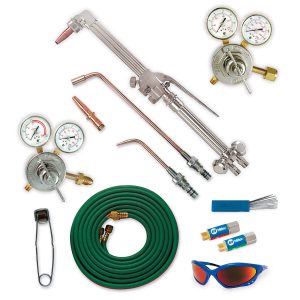
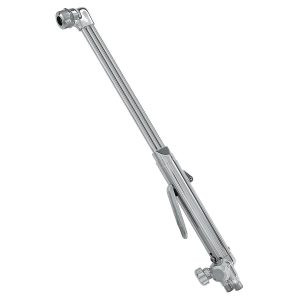
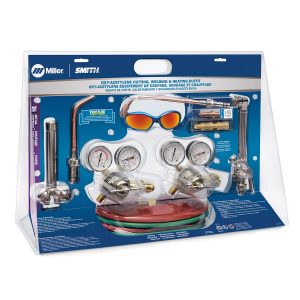
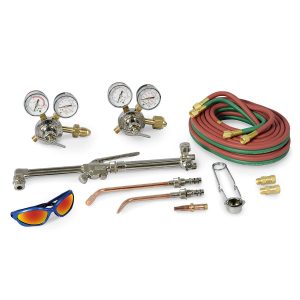
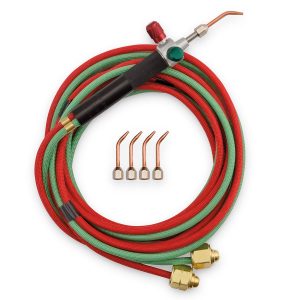
Safety Practices + Smith Design = Maximum Protection
Following these practices with Smith’s inherently safer design drastically reduces the risk of accidents in any oxyfuel environment—from automotive workshops to shipyards and fabrication plants.
Before Lighting the Torch
- Always use Smith’s recommended setup chart for correct pressures.
- Verify flashback arrestors are installed.
- Purge lines thoroughly before ignition.
During Use
- Maintain a neutral flame.
- Keep hoses untangled and away from heat.
- If a pop or hiss occurs, close both valves immediately.
After Use
- Follow the full shutdown process—fuel off, oxygen off, bleed, store.
- Inspect tips for clogging or slag buildup; clean as per Smith’s maintenance guide.
- Replace any damaged hoses or components before the next use.
Why Smith Is Considered the Safest Oxyfuel Equipment in the World
There are several reasons why Smith is the preferred brand when it comes to oxyfuel equipment. Let’s consider some of them.
Proven Engineering
Smith’s tip-mixing design eliminates the internal fuel/oxygen mixture found in many conventional torches. By removing the main path for flame travel, it reduces flashback potential to near zero.
Trusted Brand Backed by Miller Electric
Being part of Miller, a global leader in welding and cutting, means Smith products undergo the same rigorous testing and quality control. The result: safer, longer-lasting tools that meet industrial safety standards worldwide.
Real-World Endurance and Warranty
Many Smith oxyfuel torches come with extended or lifetime warranties, underscoring their durability. The long service life lowers the cost of ownership and keeps operators safer for years.
Complete Safety Ecosystem
Smith’s safety doesn’t stop at the torch. Their regulators, hoses, and flashback arrestors are designed to work as a complete system. Each component contributes to total gas control—stable pressures, clean flow, and minimized risk of leaks or reverse flow.
Safety Is Engineered into Every Smith Torch
The best safety practices in the world cannot compensate for poor equipment design. That’s why professionals who depend on reliability and safety choose Smith oxyfuel equipment.
By keeping oxygen and fuel gases separate until they reach the tip, Smith eliminates the internal ignition path that causes flashbacks in conventional torches. This unique engineering—combined with flashback arrestors, high-strength materials, and precise pressure control—makes Smith the safest oxyfuel solution for heating, cutting, brazing, and welding.
Whether you’re working in automotive repair, shipbuilding, or industrial fabrication, remember this rule: Safety starts with design—and Smith designs for safety.